Affective warfare and the democratic process
emotional instrumentalization on digital platforms and the legal limits of regulation
DOI:
https://doi.org/10.24862/rcdu.v17i2.2659Palavras-chave:
big tech companies; democracy; affective warfare; digital platforms; regulation.Resumo
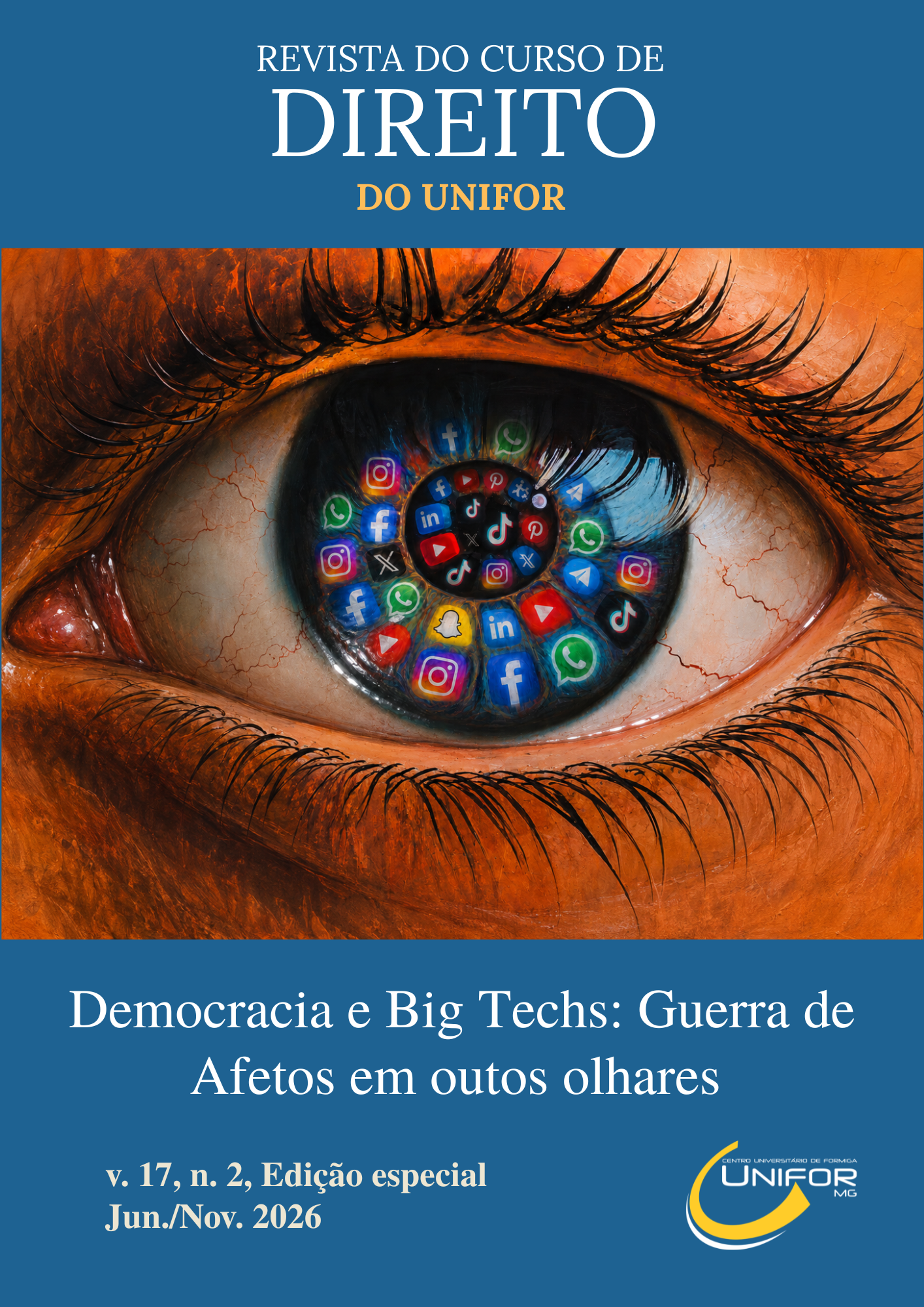
This article analyzes how emotional instrumentalization on digital platforms impacts the democratic process and what responses the Law can offer in light of the growing influence of Big Tech companies, known as big technology companies. Given the complexity of the issue, the so-called affective warfare is not merely a simple discursive phenomenon, but a consequence stemming from a vast architecture focused on digital algorithms, which are specifically designed to provoke emotional engagement among the population. Beyond emotional engagement, it must be noted that such algorithms can weaken the capacity for collective critical reflection; that is, deliberative rationality; which significantly compromises the quality of the public sphere. Legal responses focused exclusively on the repression of individual content are shown to be insufficient in the current context; a structural regulatory approach focused on the governance of digital platforms is necessary, without prejudice to constitutional guarantees, especially concerning freedom of expression as provided for in Article 5, item IV, of the 1988 Brazilian Federal Constitution of 1988 (CRFB/1988). The purpose of this study is to investigate and ascertain how emotional instrumentalization affects the Democratic State Governed by the Rule of Law and what limits the Law can impose or offer to protect deliberative public opinion. To this end, this study examines the concept of affective warfare within the context of the attention economy and algorithmic architecture, analyzes the role of Big Tech companies in amplifying social conflicts, evaluates the constitutional limits and regulatory challenges of State action, and proposes legal parameters that contribute to the protection of the democratic process without compromising the constitutional and fundamental guarantees provided for in the Brazilian legal system.
Downloads
Downloads
Publicado
Como Citar
Edição
Seção
Licença
Copyright (c) 2026 Revista do Curso de Direito do UNIFOR

Este trabalho está licenciado sob uma licença Creative Commons Attribution 4.0 International License.
O autor concede à revista os direitos autorais e o direito de primeira publicação, com o trabalho licenciado sob uma licença Creative Commons Atribuição 4.0 - Internacional que permite o compartilhamento do trabalho com reconhecimento da autoria e publicação inicial nesta revista.
Por meio da Licença Creative Commons CC BY adotada pela revista, o autor tansfere os direitos autorais e os direitos de publicação do artigo à revista. Esta licença permite que outros distribuam, remixem, adaptem, criem a partir do seu trabalho, mesmo para fins comerciais, desde que lhe atribuam o devido crédito pela criação original.
Mais informações sobre a licença adotada podem ser obtidas clicando-se no link do Creative Commons que aparece acima.