Who rules the digital?
Sovereignty and power in the platform age
DOI:
https://doi.org/10.24862/rcdu.v16i3.2371Abstract
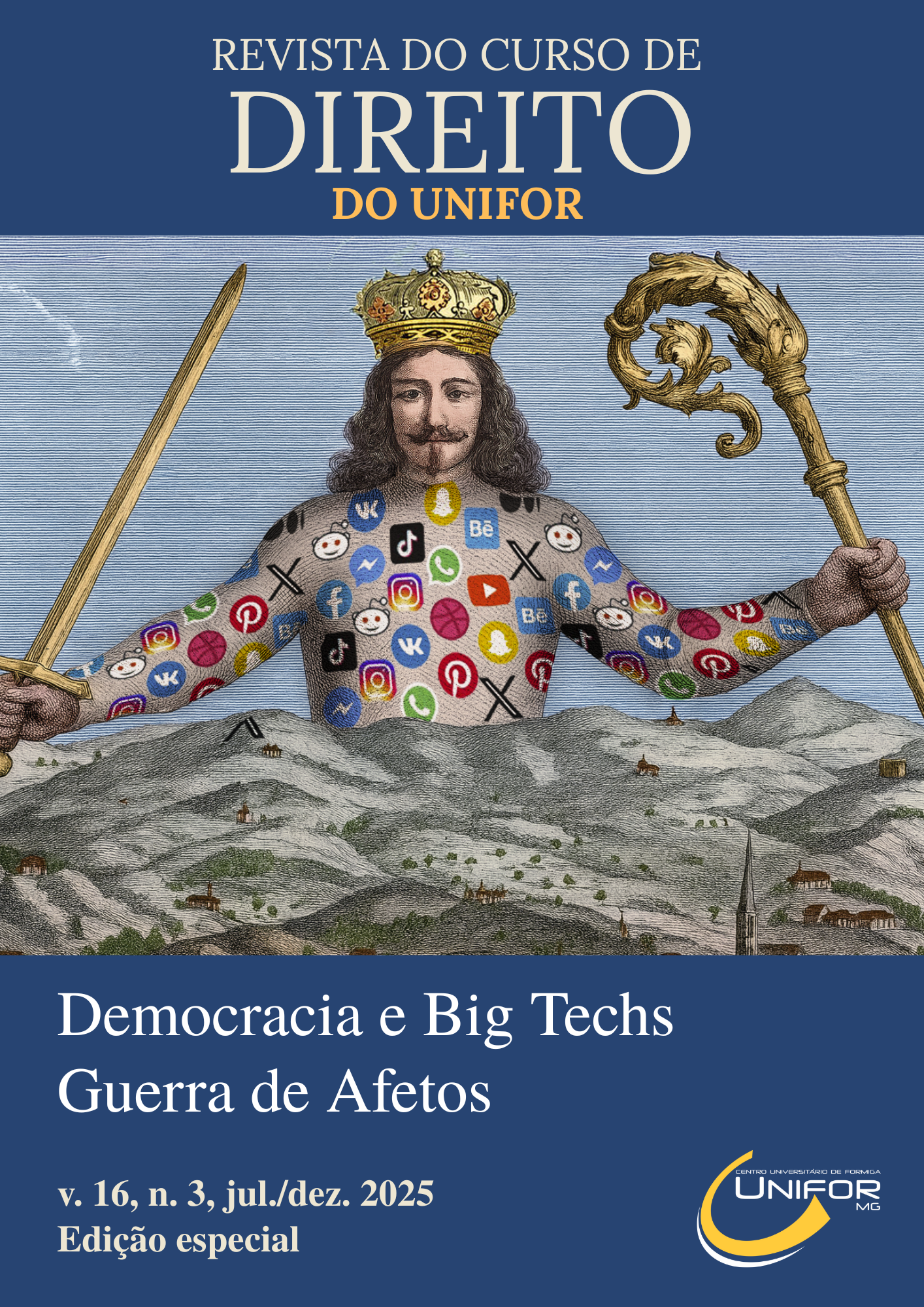
This article critically examines the impact of neossuseran hyperentities—transnational technology corporations wielding immense normative and regulatory power—on the foundations of classical constitutionalism. Starting from the hypothesis that state sovereignty, democratic consent, and checks and balances face functional collapse under digital technofeudalism, the study demonstrates that these entities operate as private sovereignties. They establish proprietary normative orders through opaque algorithms and data capture, directly affecting fundamental rights. Digital consent is treated as a fictional legitimization of an invisible subjugation regime, wherein the State loses centrality, becoming a guest within essential private infrastructures. The analysis draws on frameworks from Strange, Teubner, Zuboff, and Varoufakis and proposes a new constitutional grammar based on recognizing normative pluralism, algorithmic transparency, and the democratization of digital infrastructure. It concludes that constitutionalism's survival requires its reinvention to limit transnational technical powers and protect human dignity on a digital scale.
Downloads
Downloads
Published
How to Cite
Issue
Section
License
Copyright (c) 2025 The UNIFOR Law Course Journal

This work is licensed under a Creative Commons Attribution 4.0 International License.
The author grants to the journal their copyright and first publication rights, with work licensed under a Creative Commons Attribution 4.0 - International license that allows the sharing of work with acknowledgment of authorship and initial publication in this journal.
Through the Creative Commons CC BY License adopted by the magazine, the author transfers the copyright and publication rights of the article to the magazine. This license allows others to distribute, remix, adapt, create from your work, even for commercial purposes, provided they give you due credit for the original creation.
More information about the adopted license can be obtained by clicking on the Creative Commons link above.